

Why Learning Strategy on YouTube is Nearly Impossible
(And What I Did About It)

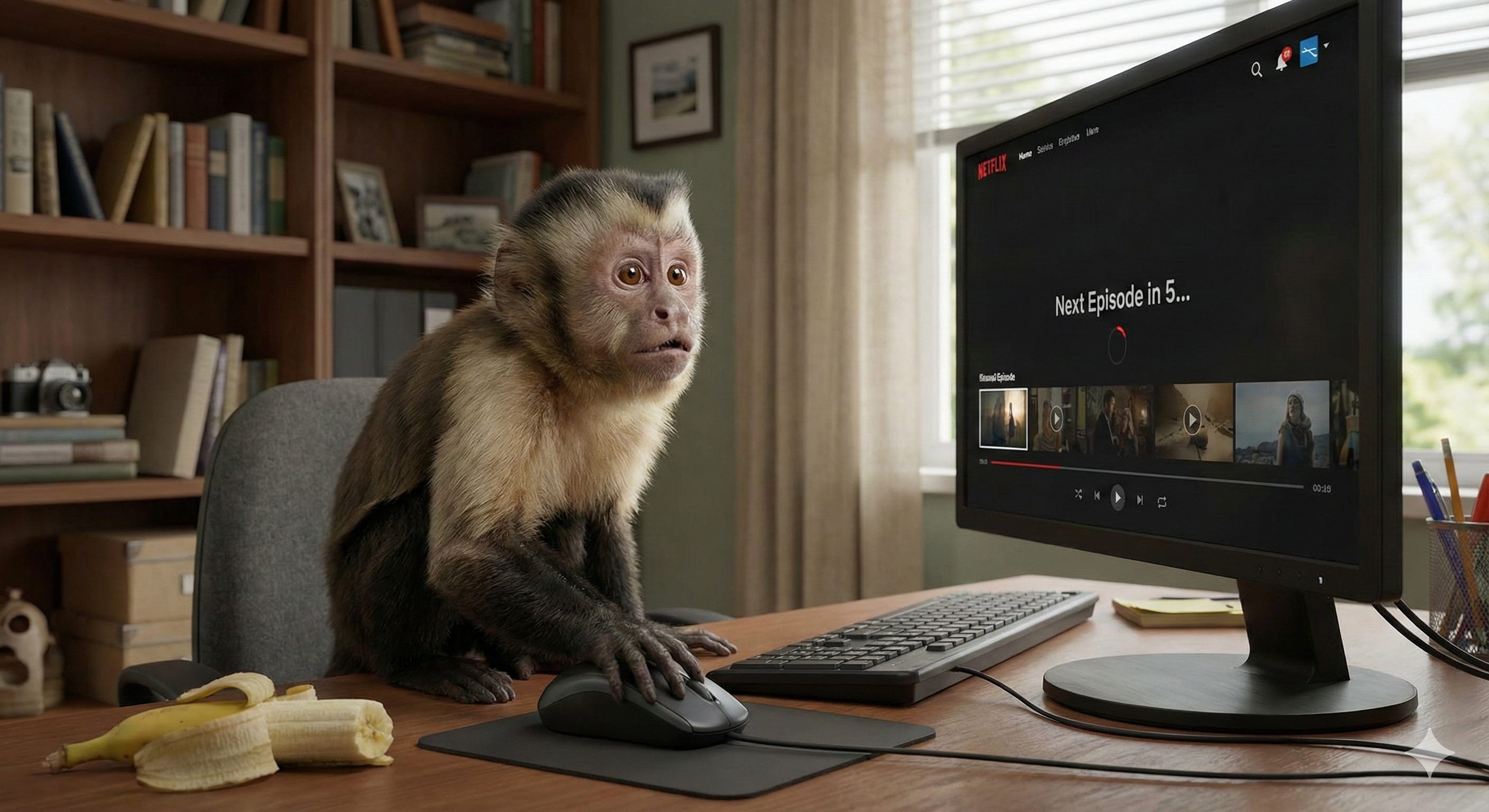
This video called me out (and probably you too)
I watched a video this week that made me understand why building StratCinema has been so hard.
It’s called “Monkey Learns Everything Online” and it’s a brutal takedown of how YouTube’s algorithm tricks us into thinking we’re learning when we’re just... collecting content.
The video stars “Monkey” - a personification of a typical YouTube user.
Here’s what hit too close to home:
Monkey watches “How to Meditate for Inner Peace.” Fifteen minutes later, Monkey is yelling at the WiFi for being too slow.
Monkey has 27 unfinished courses, 50 playlists saved, and 101 motivational videos for “someday.”
Monkey proudly announces: “I watched ten hours of coding tutorials this week!” But Monkey never opened an actual code editor. Not once.
The video explains why: the YouTube algorithm feeds you motivation without movement. It gives you sugar, not vegetables. Every click triggers dopamine—same hit as real progress, but cheaper. Your brain can’t tell the difference between watching someone solve a problem and actually solving it yourself.
Sound familiar?
Here’s the thing: The video is right about the trap. But wrong about the solution.
Strategy isn’t like coding. You can’t just “open the code editor and start.” It’s what researchers call an ill-structured domain—like medicine, military tactics, or relationships. The way concepts show up in real situations is endlessly varied. You can’t learn this from frameworks alone.
By contrast, expert strategists pull from a vast library of cases, fragments, and patterns accumulated over time. Warren Buffett built Katherine Graham’s strategic thinking at The Washington Post by sending her annual reports from dozens of companies—Coca-Cola, insurance firms, manufacturers. She didn’t take courses. She built pattern recognition through curated exposure.
This is Season 1 learning: pattern recognition through cases. Not pressure. Not guilt. Just curiosity-driven discovery. It’s the foundation that makes Season 2 learning (the hard stuff—notes, books, coaches, practice, tests) actually effective.
Monkey’s real problem wasn’t watching videos. It was watching random videos chosen by an algorithm optimized for clicks, not learning—and never transitioning from passive watching to active practice.
This is why StratCinema exists.
For months, I fought YouTube’s algorithm. I created a separate “trained channel” just for strategy content. I aggressively blocked every recommendation for Jamaican politics, motivational fluff, and tech reviews. It took weeks to train the algorithm to show me only business case studies.
Now it works 90% of the time. It’s not terribly useful, but at least it’s looking for the right things most of the time.
But you shouldn’t have to fight that battle.
StratCinema is what I wish existed from day one:
✓ Pre-curated cases (no algorithm manipulation)
✓ Organized by strategic patterns (disruption, long-termism, category design)
✓ Designed for intentional Season 1 learning
✓ Clear path to Season 2 when you’re ready
Watch the full Monkey video on StratCinema: https://stratcinema.org/movies/monkey-hijack/player/
Then browse the 100+ cases. Notice which patterns make you curious—companies destroyed by short-termism, pivots that saved failing businesses, disruptions that seemed obvious in hindsight.
When you find yourself wanting to watch a case five times, asking “What did Kodak actually try?” or “What pattern connects these failures?”—that’s your curiosity pointing you toward Season 2.
Your brain will tell you when it’s time to go deeper.
Francis
P.S. The strategists who stay relevant aren’t the ones who memorize frameworks. They’re the ones who never stop exposing themselves to new cases, new patterns, new stories. Start with Season 1.
Agreed. Strategy is a discipline and a craft, but it’s not engineering. YouTube (or books, for that matter) can give you frameworks and case studies so you are armed with tools and pattern recognition. I’d even be willing to call this learning strategy. But as you say, practicing strategy is about how you apply the craft to ill-structured problems.